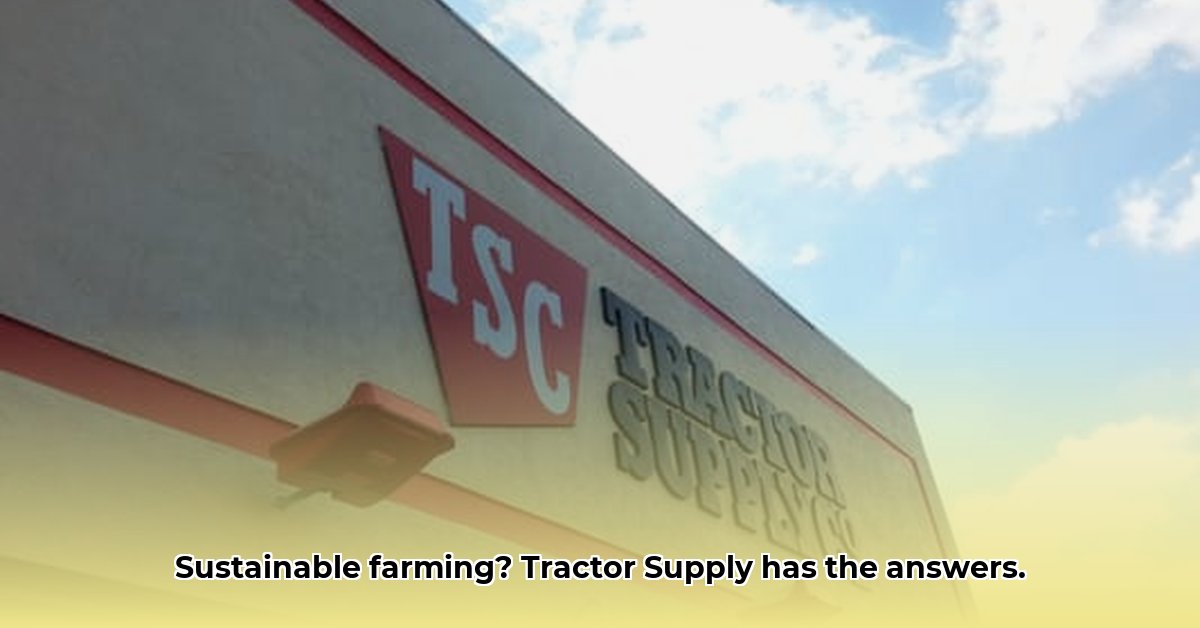
Understanding Tractor Supply's Role in Sustainable Agriculture
Tractor Supply Company (TSC) in Belton, Missouri, serves as a vital resource for local farmers and gardeners. But how does this retail giant contribute to the broader goal of sustainable agriculture? This analysis delves into TSC's direct and indirect influences, offering actionable intelligence for consumers and suggesting areas for improvement. Does Tractor Supply truly support sustainable farming practices, or is it just another retailer? Let's find out. For more on regenerative agriculture practices, see this helpful resource: Regenerative Agriculture.
TSC Belton MO: Product Offerings and Accessibility
TSC Belton offers a wide array of products crucial for farming and gardening, ranging from seeds and fertilizers to tools and animal feed. This convenience is a significant strength, consolidating essential resources in a single location. But what about the sustainability of those products? Do they offer ample organic options, water-efficient irrigation systems, or eco-friendly pest control solutions? This is where a deeper dive is necessary. How readily available are these options? Are they prominently displayed, or are they harder to find? A well-stocked store with easily accessible sustainable products is a significant step toward supporting eco-conscious agricultural practices.
Indirect Support for Sustainable Farming
TSC's impact extends beyond its direct product offerings. By supplying local farmers with essential resources, it inadvertently supports smaller-scale operations that often prioritize sustainable practices. These smaller farms often employ methods that are less resource-intensive than larger industrial farms. This indirect support is arguably as important as the direct sale of eco-friendly products. However, quantifying this indirect impact requires more transparency and data from TSC regarding their supplier relationships and the farming practices of their clientele. How many of their clients are using sustainable practices? A rhetorical question, yet one that TSC should strive to answer with verifiable data.
Areas for Improvement: Transparency and Sustainability Initiatives
Despite its positive contributions, TSC can greatly enhance its sustainability profile. A significant weakness is the lack of transparency regarding product sourcing. Knowing the origin of seeds, animal feed, and other supplies is crucial for determining their environmental impact. Are the seeds non-GMO? Are the animal feed sources employing sustainable practices? Without this information, consumers cannot make fully informed choices. Additionally, consistency in sustainability initiatives across all TSC locations is lacking. Some locations might have better recycling programs than others, highlighting a need for standardized, company-wide eco-friendly practices.
Actionable Intelligence: Empowering Sustainable Choices
Consumers can actively participate in shaping TSC’s sustainability efforts. Here's how:
Ask Targeted Questions: Directly inquire with TSC staff about their sourcing practices and sustainability commitments. Demand transparency regarding the origin and production methods of the products they sell. This direct engagement pressures the company to prioritize sustainability information.
Prioritize Sustainable Products: Consciously choose products from companies with demonstrable commitments to sustainability and ethical sourcing. Look for certifications and labels verifying organic or sustainable practices.
Advocate for Change: Share your concerns and support for sustainable practices directly with TSC through feedback forms, social media, or customer service channels. Your voice matters.
A Roadmap for TSC's Greener Future
To fully embrace sustainability, TSC should take these steps:
Conduct a Comprehensive Sustainability Audit: A thorough review of the entire supply chain will identify areas for improvement and pinpoint opportunities for more responsible sourcing.
Establish Measurable Sustainability Goals: Setting clear, achievable, and time-bound goals provides accountability and allows for progress tracking.
Prioritize Sustainable Sourcing: Actively work with suppliers committed to ethical and environmentally responsible practices. This includes verifying sustainable sourcing and promoting transparency.
Invest in Waste Reduction and Recycling: Implement robust recycling and composting programs in all locations to minimize their environmental footprint.
Partner with Sustainable Agriculture Organizations: Collaborating with experts and advocates can provide guidance and support.
Risk Assessment Summary
| Factor | Probability | Impact | Mitigation |
|---|---|---|---|
| Sustainable Sourcing | Medium | High | Implement rigorous supply chain traceability and partner with certified sustainable suppliers. |
| Waste Management | Low | Medium | Improve recycling and waste reduction programs across all locations. |
| Product Certifications | Low | Medium | Increase the availability of certified sustainable products and clearly label them. |
| Consumer Awareness | Medium | Low | Educate consumers about sustainable agriculture through in-store materials and online resources. |
This detailed analysis provides a clear picture of Tractor Supply's role in sustainable agriculture within the Belton, Missouri community. It highlights both its contributions and areas for significant improvement, empowering consumers to make informed choices and encouraging TSC to take proactive steps towards a greener future.